
Understanding Jersey Fabric: Types, Composition and Applications
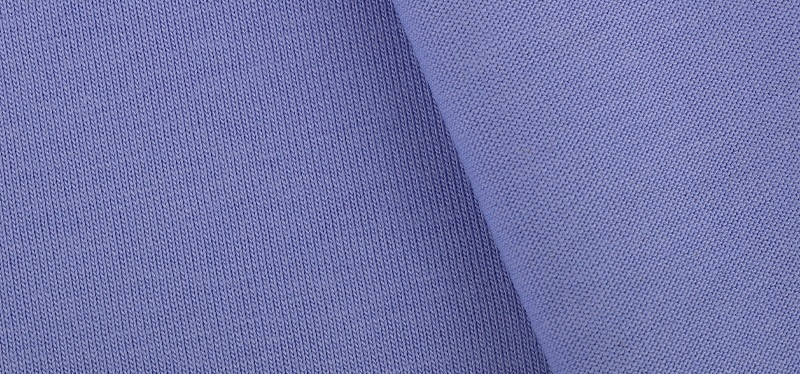
Jersey fabric is one of the most widely used knitted fabrics for T-shirts, tops, dresses, underwear, babywear, kidswear, loungewear and everyday casualwear. It has a smooth knit face, natural fabric flexibility and a comfortable hand feel, making it a practical base fabric for many apparel programs.
For apparel buyers, jersey fabric should not be selected only by composition. GSM, yarn type, stretch level, width, shrinkage, spirality, surface cleanness and colour development route all affect how the final garment looks, fits and performs after washing.
This guide explains how to choose single jersey fabric from a sourcing and production point of view, including fabric structure, GSM selection, common compositions, printing suitability, quality checkpoints, MOQ logic and what information buyers should prepare before asking for swatches or quotation.
What Is Jersey Fabric?
Jersey fabric is a weft knitted fabric made with interlocking loops of yarn. In apparel sourcing, “jersey” usually refers to single jersey knit unless another construction is specified. It has a smooth face side and a different reverse side, which makes it lighter and more flexible than many double-knit structures.
Single jersey is commonly used when the garment needs softness, drape and everyday comfort. It is especially suitable for T-shirts, fashion tops, lightweight dresses, underwear, kidswear and close-to-skin garments. However, because of its single-knit structure, buyers should pay attention to curling, shrinkage and spirality before bulk production.
| Fabric Type | Single jersey knit fabric |
| Fabric Face | Smooth knitted surface for T-shirts, tops and daily apparel |
| Reverse Side | Different loop appearance from the face side |
| Common Fibres | Cotton, polyester, bamboo, modal, lyocell and spandex blends |
| Typical Weight Range | Around 130gsm to 270gsm, depending on garment use and required body |
| Common Garments | T-shirts, tops, dresses, underwear, babywear, kidswear, loungewear and casual basics |
Single Jersey Structure and Why It Matters
Single jersey fabric is lightweight, flexible and comfortable because it is made with a single-knit structure. This gives the fabric a softer drape than many heavier knit constructions, but it also means buyers should check the fabric carefully before garment production.
Compared with interlock or double-knit fabrics, single jersey normally has less structure and more natural edge curling. This is not a defect by itself, but it affects cutting, sewing and garment handling. For T-shirts, underwear and lightweight tops, this flexibility is often an advantage. For structured garments, buyers may need heavier jersey, interlock, rib, French terry or another knit base.
| Smooth Face | Good for clean T-shirt surfaces, simple tops, printing and everyday casual styles. |
| Natural Flexibility | Useful for comfortable daily wear, kidswear and close-to-skin garments. |
| Edge Curling | Needs attention during cutting and sewing, especially for lightweight jersey. |
| Spirality Risk | Side seam twisting may appear after washing if yarn, knitting and finishing are not controlled. |
Jersey vs Interlock vs Rib Fabric
Jersey is often compared with interlock and rib because all three are common knit fabrics. For apparel development, the difference is not only surface appearance. Each structure gives a different garment result.
| Fabric | Structure Direction | Best Use |
|---|---|---|
| Single Jersey | Lightweight single-knit structure with smooth face and natural drape | T-shirts, tops, dresses, underwear, babywear, kidswear and lightweight casualwear |
| Interlock | Double-knit structure with a smoother, more stable hand feel | Structured T-shirts, babywear, uniforms, polos and garments needing more stability |
| Rib Fabric | Vertical rib structure with stronger stretch and recovery | Fitted tops, cuffs, neckbands, waistbands, tanks, leggings and stretch garments |
For a standard T-shirt or soft daily top, jersey is usually the first option. For more stability and less curling, interlock may be better. For fitted garments or trims that need strong recovery, rib fabric is usually more suitable.
How to Choose Jersey Fabric GSM
GSM affects garment thickness, drape, opacity, season and price. For jersey fabric, the right GSM should be selected according to garment type, target market and fit. A lightweight jersey may feel soft and easy to wear, but it may not give enough coverage for some garments. A heavyweight jersey gives more body but may not suit soft draped tops.
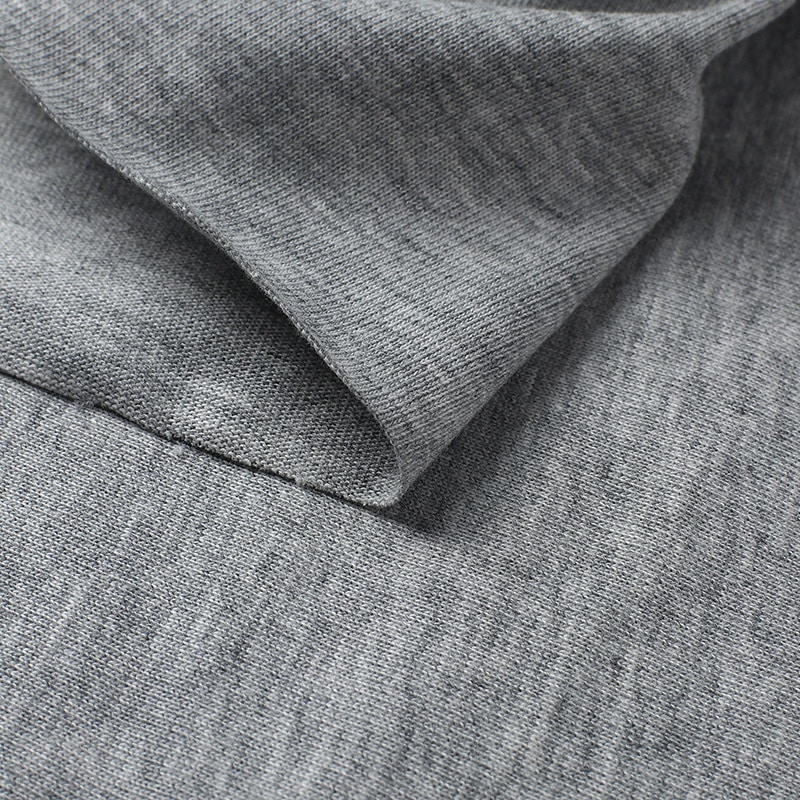
230gsm 185cm single jersey fabric with a fuller body for heavyweight T-shirts, tops and casualwear.
| GSM Range | Fabric Direction | Suitable Garments |
|---|---|---|
| 120–140gsm | Lightweight jersey with soft drape and airy hand feel | Babywear, underwear, lightweight T-shirts, summer tops and soft lounge layers |
| 145–170gsm | Regular lightweight to midweight jersey for daily apparel | Basic T-shirts, fashion tops, kidswear, dresses and casual programs |
| 180–220gsm | More coverage and body while still keeping jersey comfort | Premium T-shirts, fitted tops, loungewear, underwear and casual dresses |
| 230–270gsm | Heavyweight jersey with fuller structure | Oversized T-shirts, heavyweight tops, dresses and substantial casualwear |
Choosing Jersey Fabric by Composition
Composition changes how jersey fabric feels, stretches, drapes, shrinks and performs in bulk production. Buyers should choose the fibre blend according to garment positioning rather than only following a standard fabric name.
| 100% Cotton Jersey | Classic natural hand feel for T-shirts, tops, kidswear and daily casualwear. Shrinkage and twisting should be checked carefully. |
| Cotton Spandex Jersey | Adds stretch and recovery, suitable for fitted T-shirts, dresses, kidswear, loungewear and close-to-body garments. |
| Bamboo Cotton Jersey | Soft hand feel for babywear, kidswear, underwear, lounge tops and comfort-led basics. |
| Bamboo Spandex Jersey | Soft touch with light stretch, suitable for underwear, loungewear, fitted tops and close-to-skin apparel. |
| Polyester Jersey | Suitable for sports T-shirts, linings, active tops and casual programs where easy-care synthetic jersey is required. |
| Lyocell Cotton Jersey | Smoother drape and more refined hand feel, suitable for premium T-shirts, tops, dresses and elevated basics. |
Towin Jersey Fabric Options
Towin Textile supplies jersey fabric for T-shirts, tops, babywear, kidswear, underwear, dresses, loungewear and casual apparel programs. The following options show common directions buyers can use as a starting point for fabric selection.
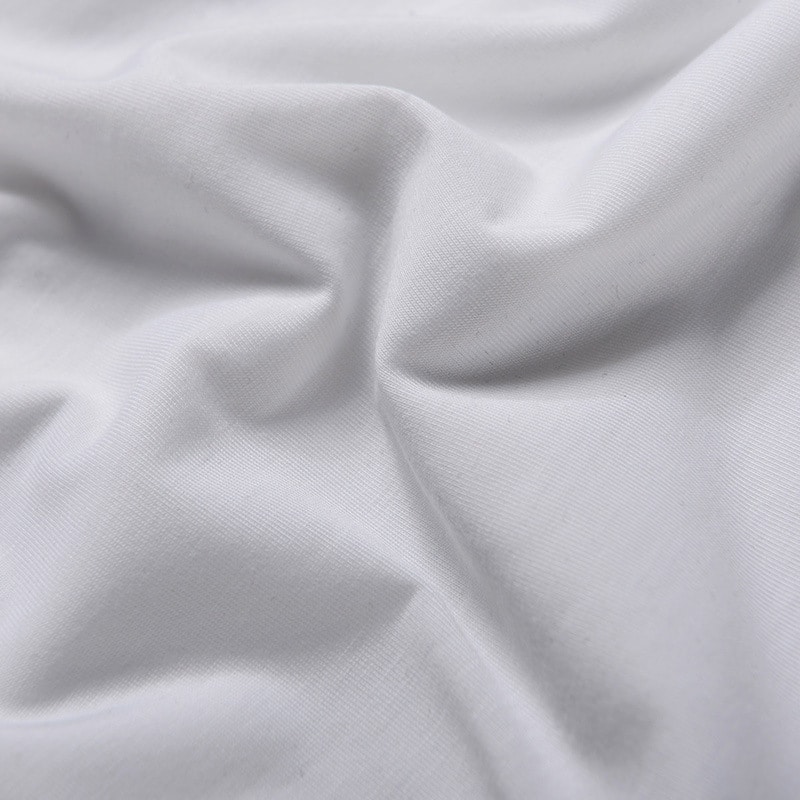
160gsm 170cm 100% polyester jersey fabric with a smooth knitted surface for sports T-shirts and active tops.
| Jersey Fabric Collection | Main category page for jersey options, including cotton jersey, bamboo jersey, polyester jersey, stretch jersey and premium blended jersey fabrics. |
| 130gsm Bamboo Organic Cotton Single Jersey | 70% Bamboo / 30% Organic Cotton, 130gsm, 185cm width. Suitable for T-shirts, babywear, kidswear, underwear, lounge tops and lightweight basics. |
| 145gsm 100% Cotton Twisted Yarn Single Jersey | Lightweight cotton jersey with a cleaner surface and drier hand feel, suitable for T-shirts, fashion tops and lightweight casualwear. |
| 160gsm 100% Polyester Single Jersey | Lightweight polyester jersey for sports T-shirts, linings, active tops and easy-care casual programs. |
| 155gsm 95% Cotton 5% Spandex Single Jersey | Stretch cotton jersey for fitted T-shirts, tops, dresses, kidswear and daily casual garments that need comfort recovery. |
| 160gsm Lyocell Cotton Mercerized Single Jersey | 70% Lyocell / 30% Cotton, 160gsm, 175cm width. Suitable for premium T-shirts, refined tops, dresses and elevated daily basics. |
| 190gsm 95% Bamboo 5% Spandex Single Jersey | Soft stretch bamboo jersey for T-shirts, fitted tops, loungewear, underwear and close-to-skin comfort apparel. |
| 230gsm 185cm Single Jersey | A fuller-body single jersey option for heavyweight T-shirts, oversized tops, dresses and more substantial casualwear. |
Production note: Towin’s jersey category includes common weights from lightweight 130gsm jersey to heavier 230gsm–270gsm jersey. For custom colours, MOQ normally depends on composition, yarn, dyeing route and fabric weight. As a practical reference, custom dyeing is often confirmed from around 300kg per colour, while stock colour availability may support smaller sample yardage or one-roll development depending on inventory.
Jersey Fabric for Printing and Surface Development
Jersey fabric is often used for printed T-shirts, fashion tops and placement print garments. Before printing, buyers should check the fabric surface, stretch level and colour base. A clean and stable surface usually gives better print handling than a loose or uneven fabric surface.
For garment printing, fabric stretch can affect print cracking, registration and hand feel. For yardage printing, shrinkage and fabric relaxation should be checked before cutting. Printing method should be confirmed according to artwork, print size, colour count, base colour and order quantity.
| Screen Printing | Suitable for many T-shirt and fashion top programs, especially when colour count and artwork are suitable. |
| Digital Printing | Useful for detailed artwork or lower quantity development, depending on fabric composition and print requirement. |
| Placement Print | Needs accurate artwork size, panel size and garment position to avoid scale or placement issues. |
| Base Colour Check | Dark base colours may need different print handling compared with white or light-coloured jersey. |
Quality Checkpoints Before Bulk Production
Single jersey fabric should be reviewed carefully before bulk cutting, especially for T-shirts, fitted tops, dresses and kidswear where garment measurement and seam position are important.
| Shrinkage | Important for cotton, bamboo, modal and lyocell blends. Washing test should be confirmed before bulk cutting. |
| Spirality / Twisting | Side seam twisting can affect T-shirts and dresses after washing, especially in single jersey structures. |
| Fabric Relaxation | Jersey should be relaxed before cutting to reduce roll tension and improve garment measurement stability. |
| Stretch Recovery | Important for spandex jersey used in fitted tops, underwear, kidswear and loungewear. |
| Edge Curling | Lightweight single jersey may curl at the cut edge, which needs attention during cutting and sewing. |
| Surface Cleanness | Important for plain T-shirts, light colours, printing, embroidery and premium basic garments. |
Stock Colour vs Custom Colour Jersey Fabric
For early-stage development or smaller sample programs, stock colour jersey is often the faster and more practical option. It can help buyers review hand feel, GSM, stretch and garment suitability before committing to custom dyeing.
Custom colour jersey is more suitable when the buyer needs a specific Pantone, a brand colour, repeat production shade or colour coordination across several fabric qualities. Custom dyeing normally requires lab dip approval and a higher MOQ because the dyeing process includes machine setup, colour control, fabric loss and finishing adjustments.
| Option | Best For | Buyer Should Confirm |
|---|---|---|
| Stock Colour | Fast sampling, small yardage, trial production and early garment development | Current stock quantity, shade batch, width, GSM and repeat availability |
| Custom Colour | Brand colours, Pantone matching, repeat bulk programs and coordinated collections | MOQ per colour, lab dip lead time, bulk lead time, shrinkage and colourfastness requirement |
Jersey Fabric Development Process
For B2B apparel development, the fabric direction should be confirmed before garment sampling whenever possible. This helps avoid fit changes caused by switching fabric weight, stretch or composition after the first sample.
| Step 1 | Confirm garment type, such as T-shirt, fitted top, underwear, babywear, dress, loungewear or active top. |
| Step 2 | Confirm target GSM, composition, stretch requirement, hand feel and fabric width. |
| Step 3 | Review stock colour options or decide whether custom lab dip is required. |
| Step 4 | Check swatch or sample yardage for hand feel, stretch, opacity, shrinkage and surface appearance. |
| Step 5 | Confirm bulk route, including colour approval, testing requirement, quantity and delivery schedule. |
Jersey Fabric Buying Checklist
Before requesting a quote, buyers should provide enough information for the supplier to recommend the correct jersey quality. A request that only says “jersey fabric for T-shirts” is usually not enough for accurate sourcing.
- Target garment: T-shirt, dress, underwear, babywear, kidswear, loungewear, active top or casualwear
- Preferred composition: cotton, cotton spandex, bamboo blend, modal blend, lyocell blend or polyester
- Target GSM or reference fabric weight
- Required width or garment marker requirement
- Stretch requirement and whether spandex is needed
- Stock colour acceptable or custom Pantone colour required
- Estimated quantity per colour
- Printing, embroidery or garment washing requirement
- Testing requirements, such as shrinkage, colourfastness or certification
- Sample deadline and expected bulk delivery date
Frequently Asked Questions About Jersey Fabric
What is jersey fabric mainly used for?
Jersey fabric is mainly used for T-shirts, tops, dresses, underwear, babywear, kidswear, loungewear and everyday casualwear. The final use depends on GSM, composition, stretch and hand feel.
What GSM jersey is suitable for T-shirts?
For regular T-shirts, many buyers start from around 145gsm to 180gsm. Lightweight styles may use 130gsm to 140gsm, while heavyweight oversized T-shirts may use 220gsm to 270gsm depending on the required body.
Is cotton spandex jersey better than 100% cotton jersey?
Not always. Cotton spandex jersey is better when the garment needs stretch and recovery, such as fitted tops, dresses, kidswear and loungewear. 100% cotton jersey is suitable for classic T-shirts and casual tops where natural cotton hand feel is preferred.
Does single jersey fabric curl at the edges?
Yes, single jersey can curl at the cut edges because of its knitted structure. This should be considered during cutting, sewing and sample development, especially for lightweight jersey.
Can jersey fabric be used for printing?
Yes. Jersey is commonly used for printed T-shirts and fashion tops. The printing method should be confirmed according to fabric composition, stretch, base colour, artwork size and order quantity.
Can Towin supply jersey fabric swatches?
Yes. Towin Textile can support jersey fabric swatches, sample yardage and custom colour development according to selected quality, colour, MOQ and production schedule.
Source Jersey Fabric from Towin Textile
Towin Textile supplies jersey fabric for T-shirts, tops, dresses, underwear, babywear, kidswear, loungewear, active tops and casual apparel programs.
We can help review your target garment, composition, GSM, width, stretch requirement, colour standard and estimated quantity, then recommend suitable jersey fabric options for sampling or bulk production.
View our Jersey Fabric collection or contact us with your target garment, colour and estimated order quantity.
Related Articles
If you are comparing jersey with other knitted fabrics, these related guides may also help:
French Terry Fabric for Hoodies, Joggers and Sweatshirts
Useful when comparing jersey with loop-back sweatshirt fabrics for hoodies, joggers and casual sets.
Rib Knit Fabric: Stretch, Structure and Garment Uses
Useful for choosing cuffs, neckbands, waistbands, fitted tops and stretch garment parts.
Velour Knit Fabric: Plush Texture for Tracksuits and Loungewear
Useful when comparing smooth jersey with plush velour for fashion sets, tracksuits and loungewear.